
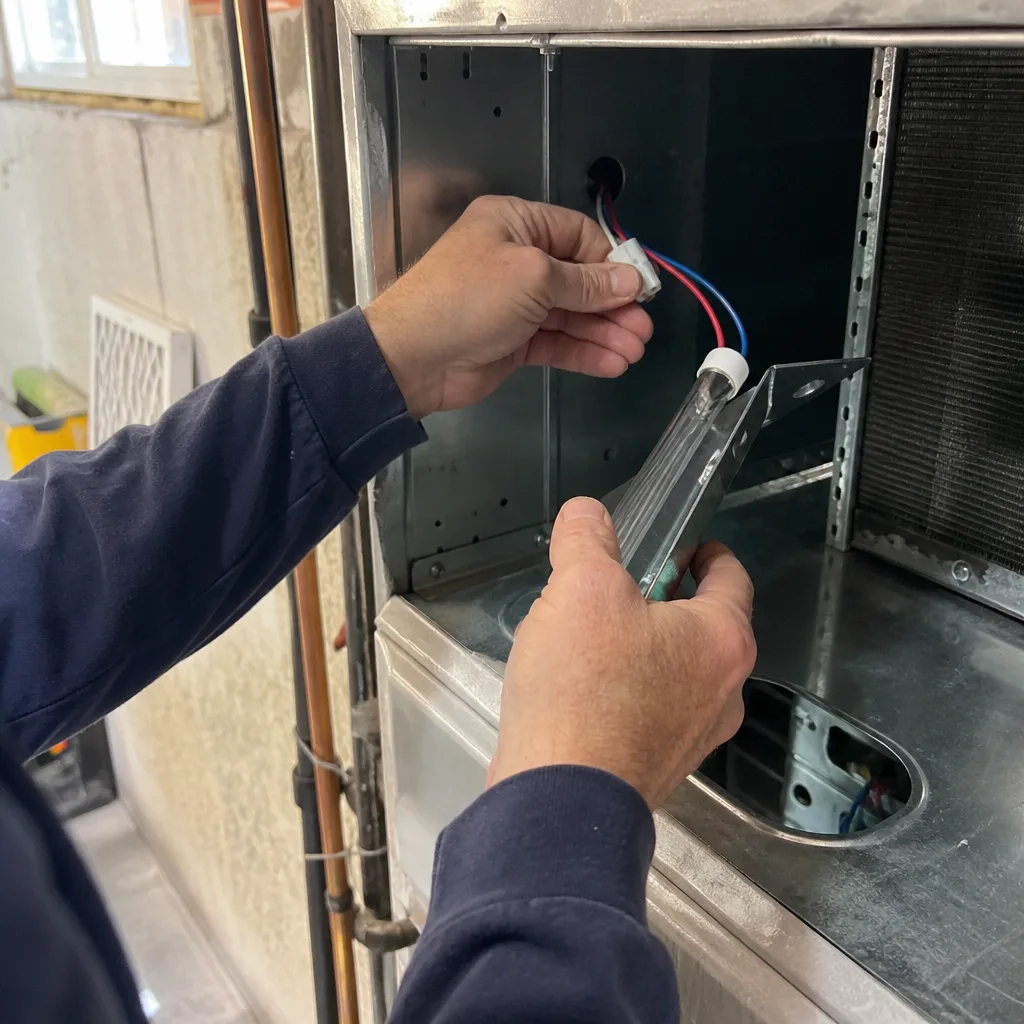
Last updated November 23, 2026
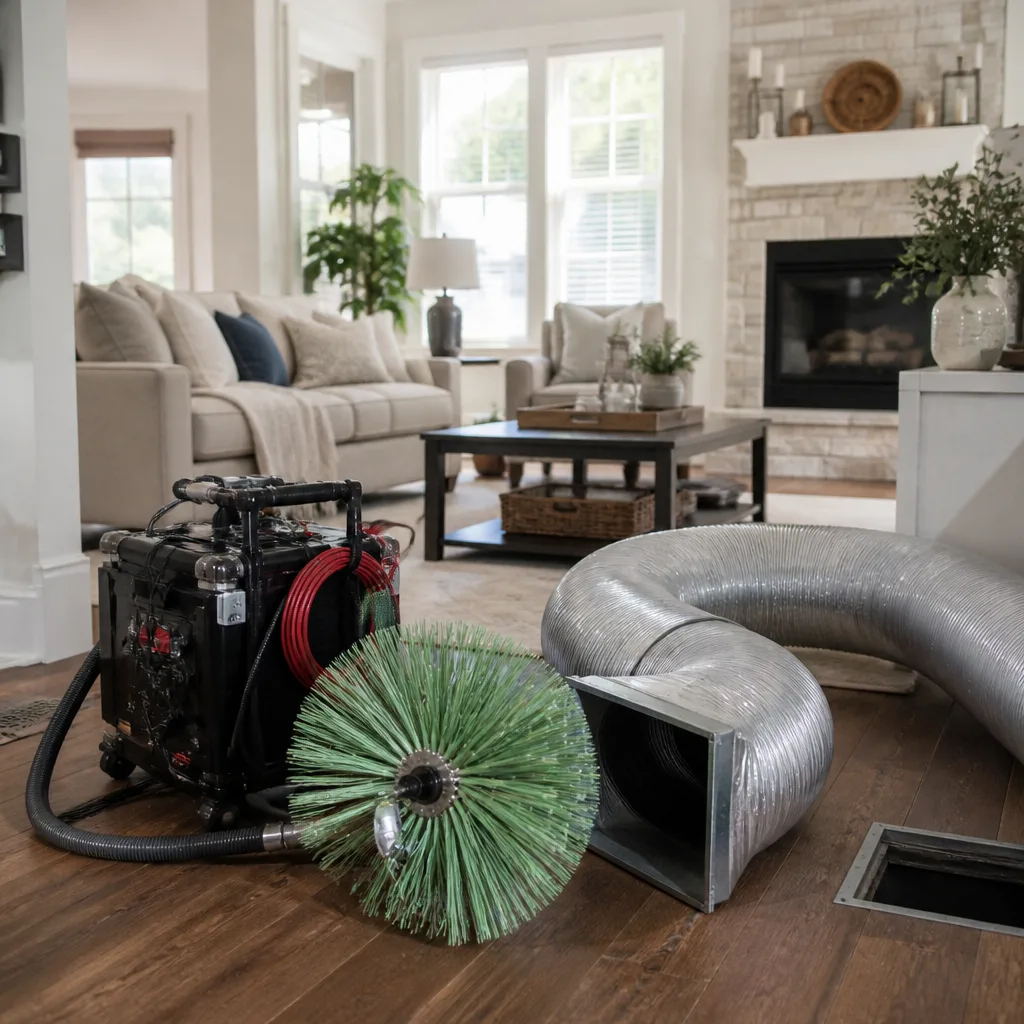 Whole-home duct cleaning
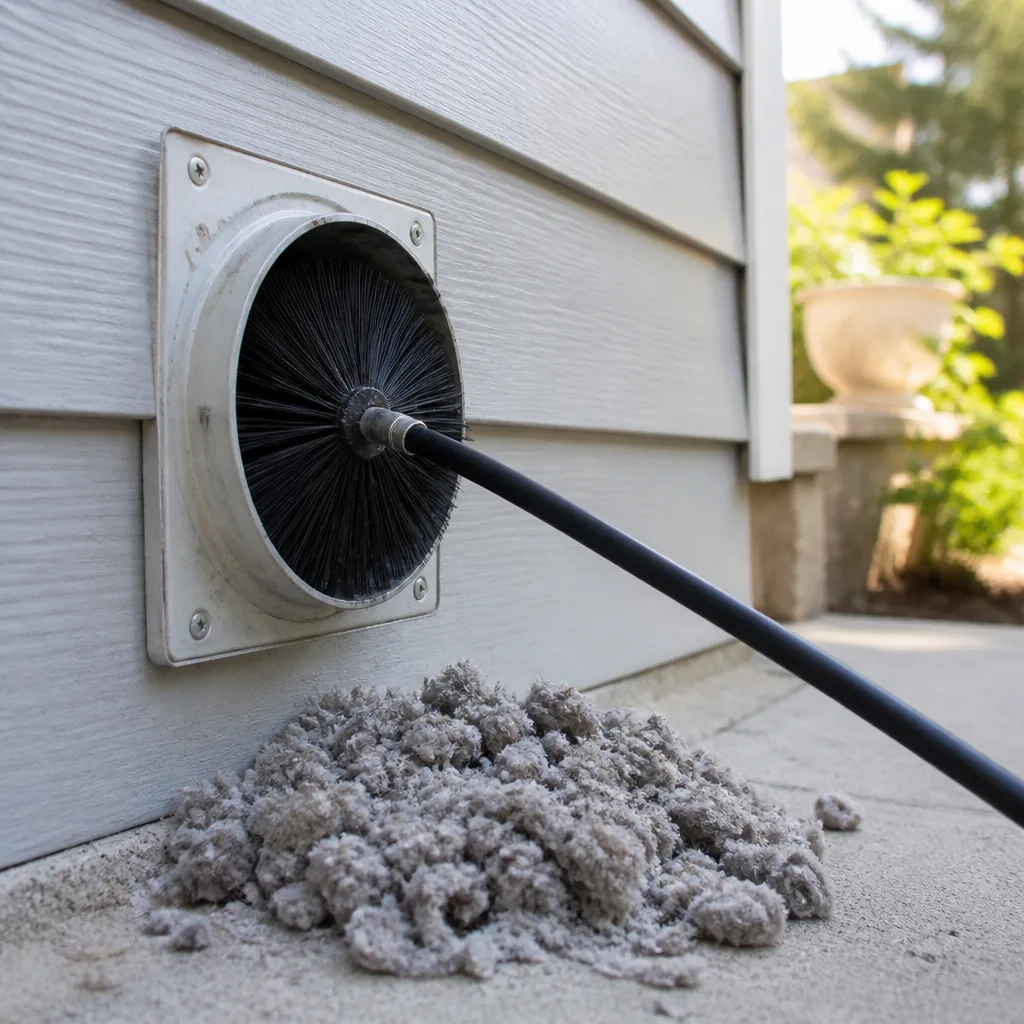 Dryer vent cleaning
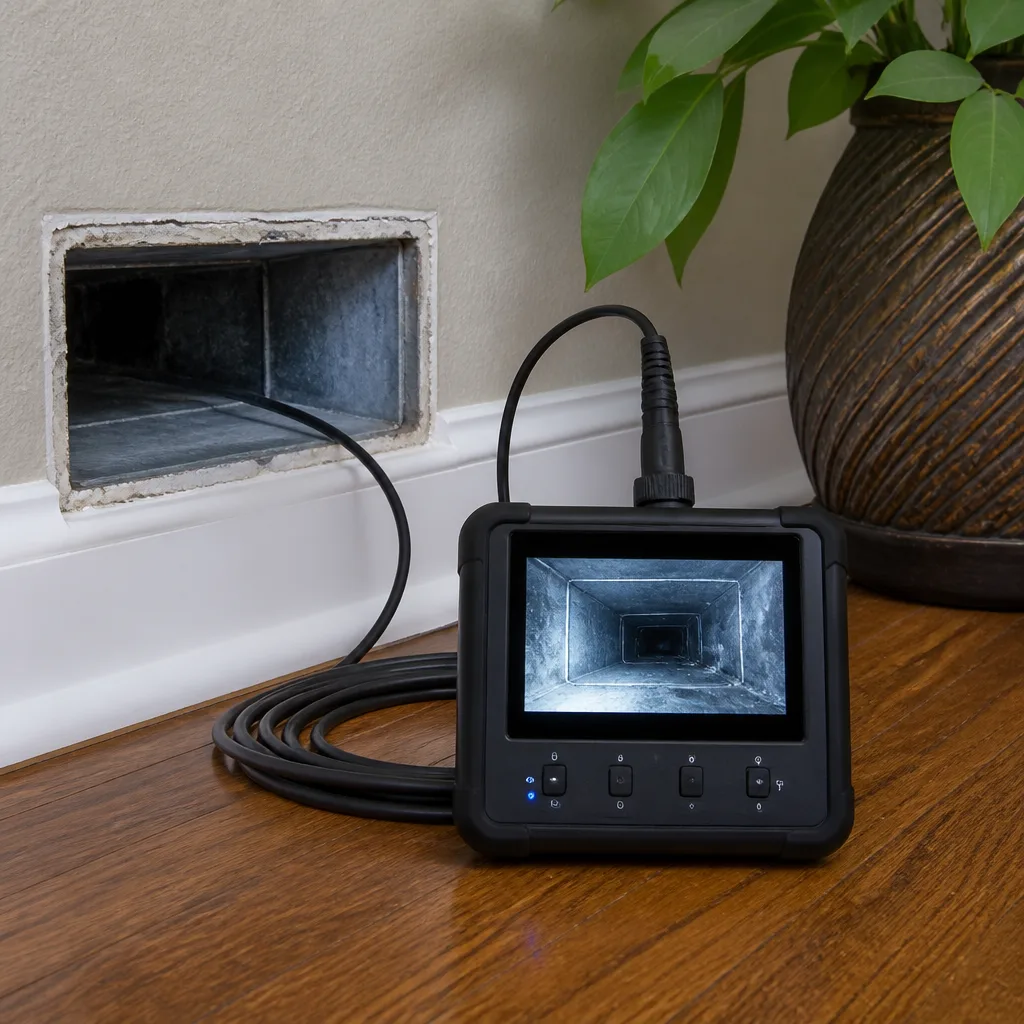 Camera inspection
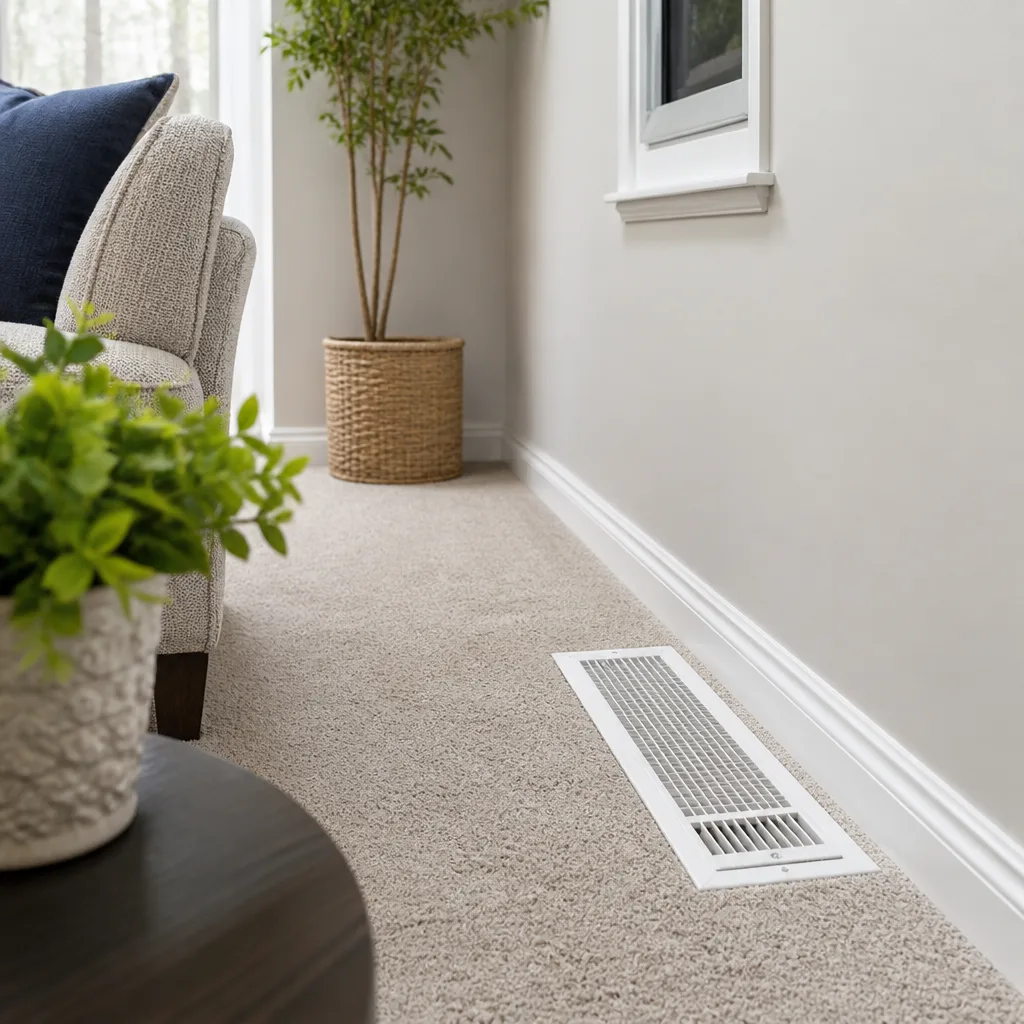 Sanitizing & deodorizing
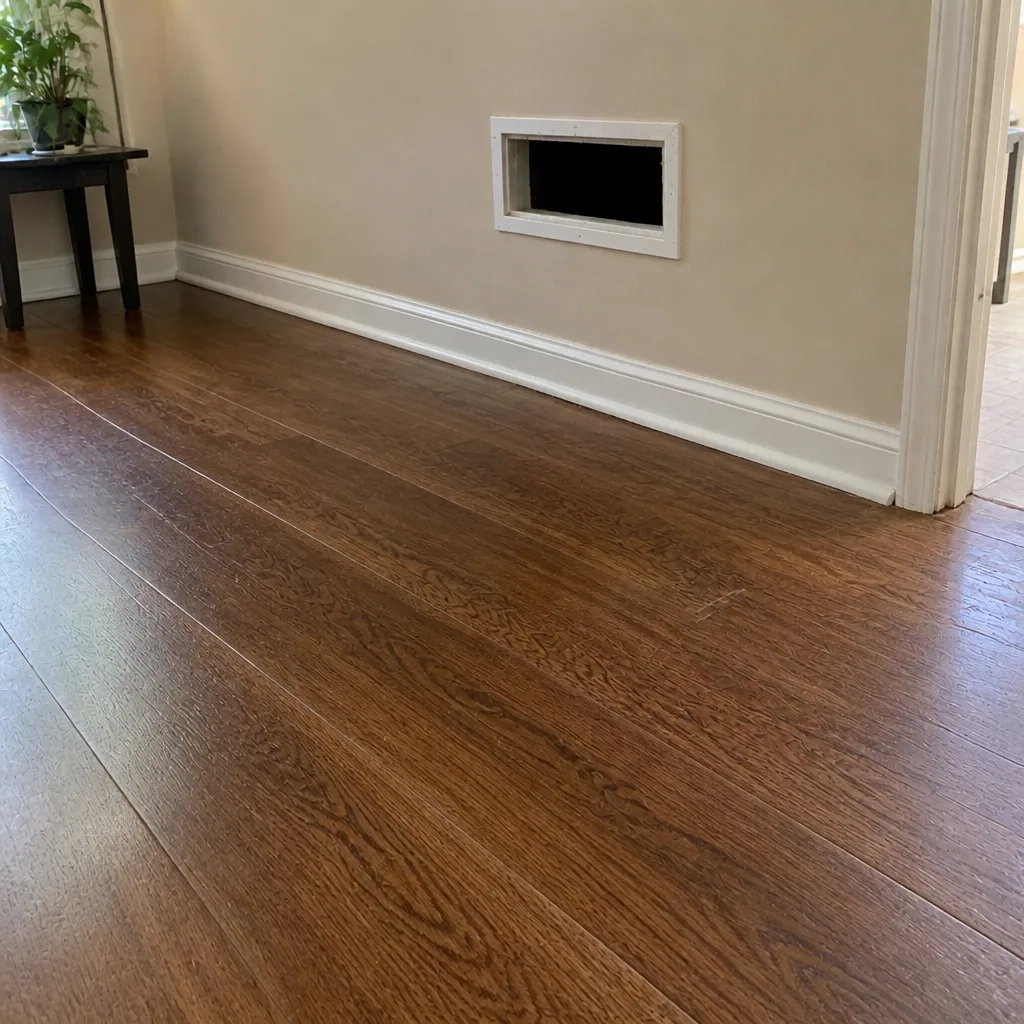
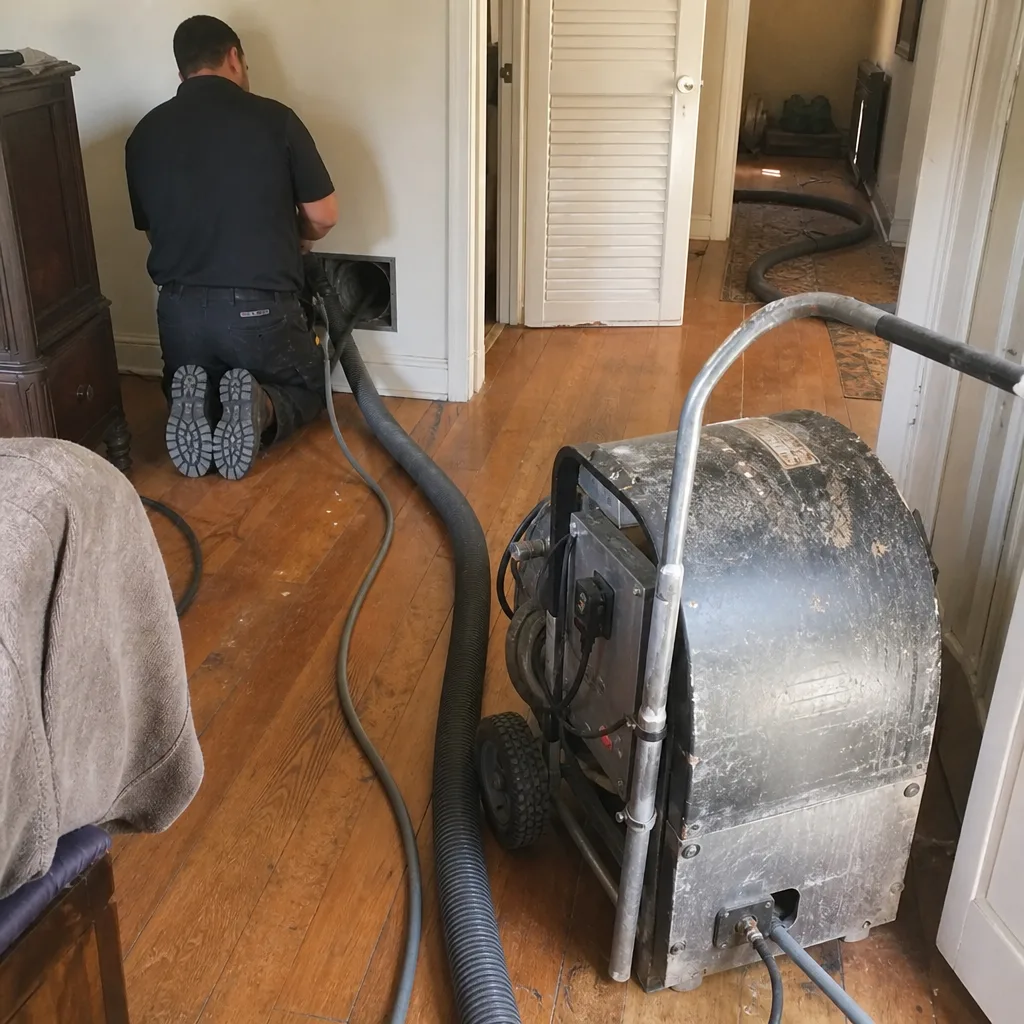
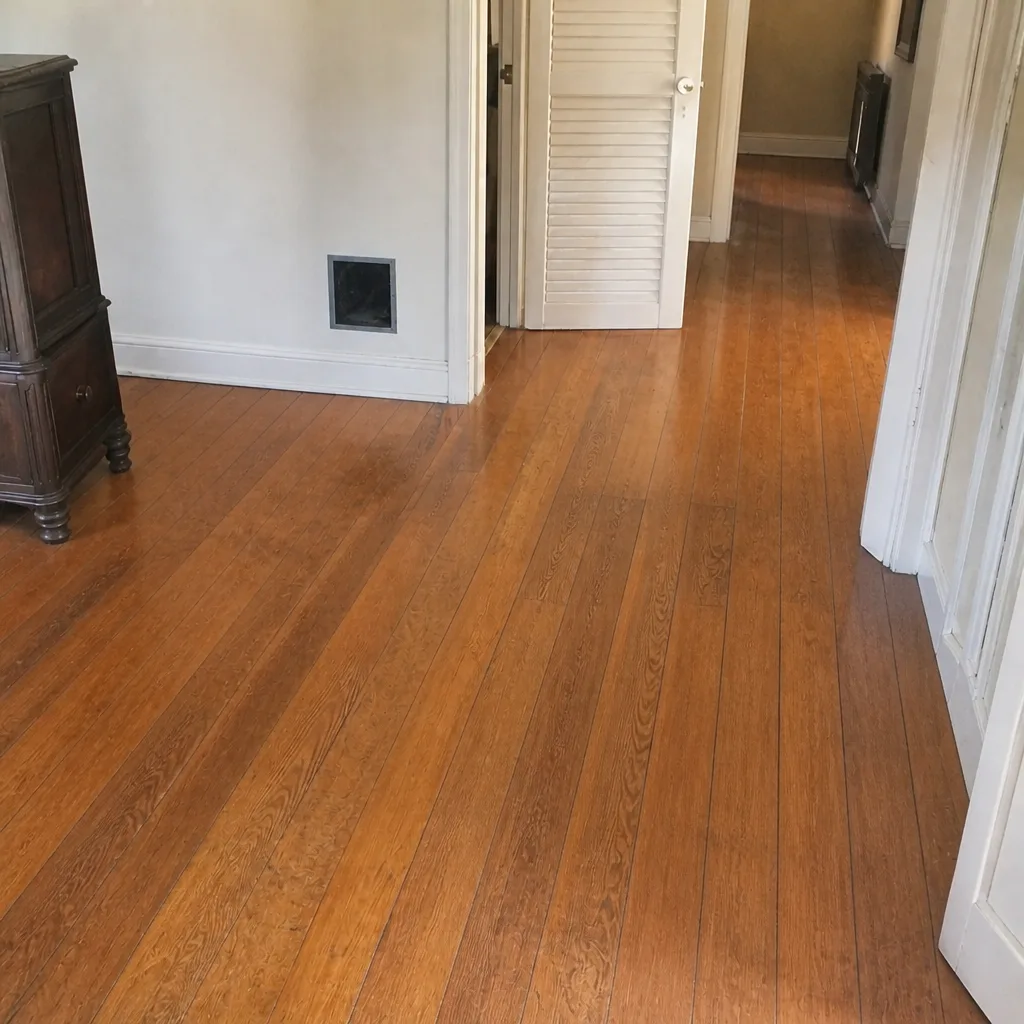
Whole-system duct and dryer vent check with before-and-after photos - you see exactly what came out of your vents
That "$99 whole-house special" is a bait ad - the real number appears once they are in your hallway, or the "clean" is a shop-vac at the register. We photograph the inside of your ducts before and after instead.
Air Duct Cleaning Warning Signs: An Adams Farm Homeowner’s Reference Guide
If one room in your home is consistently 4 to 6 degrees warmer than the thermostat setting, the usual diagnosis is “the HVAC is going bad.” In many homes, it isn’t. The real cause is duct leakage or a blockage that a trained technician spots within the first minutes of an inspection. Duct problems rarely announce themselves directly. They show up as allergies that won’t quit, bills that climb without explanation, and rooms that never quite feel right. This guide decodes those indirect signals so you can act early instead of waiting for a failure. We’ve written it for Adams Farm homeowners who research before they spend.
Quick Answer
The main warning signs of a dirty or failing duct system are uneven room temperatures, dust that settles faster than it should, moldy or musty smells that appear when the HVAC starts, allergy symptoms that flare when the system runs, unexplained jumps in your energy bill, and visible debris around the registers. Any one of these on its own may mean something else. Two or three together usually point to the ducts.
Styles & brands we work with
- Whole-home duct cleaning
- Dryer vent cleaning
- Camera inspection
- Sanitizing & deodorizing
Table of Contents
- The Register Dust Pattern Test
- Musty Odor on Startup vs. Persistent Smell
- Utility Bill Spikes Without a Usage Change
- Allergy and Asthma Patterns Tied to HVAC Operation
- Visible Debris at Registers vs. What’s Inside the Duct
- Uneven Room Temperatures and Weak Airflow
- What You Can Safely Check Yourself
- When a Camera Inspection Makes Sense
The Register Dust Pattern Test
Look at the dust on and around your supply registers. If every register in the house collects a similar thin film at roughly the same rate, your system is probably delivering air evenly and the dust is normal household load. If some registers are heavily coated while others stay nearly clean, the airflow through your ducts is unbalanced, and that imbalance almost always traces back to a leak, a disconnected run, or a blockage somewhere in the system.
Here’s how to read the pattern:
- Uniform light dust on all registers: airflow is roughly even. Normal dust is fine.
- Heavy dust on some registers, clean on others: suspect a leak or a crushed or disconnected duct feeding the dusty rooms, pulling in unfiltered air.
- Dark streaks radiating from a register: this is often filtered air leaking around a poorly sealed boot where the duct meets the wall or floor.
- Dust settling on horizontal surfaces right below a register: air is blowing out with more particulate than it should, which points to a dirty duct interior or a filter that isn’t catching what it needs to.
The pattern matters more than the volume. A home in Adams Farm can look dusty everywhere and still have clean ducts. It’s the asymmetry – the rooms that stay dirtier than the rest – that tells the real story. When we inspect a system with a Rotobrush or Nikro setup, that register pattern is usually the first thing we confirm. If the pattern is uneven, the camera goes in.
Musty Odor on Startup vs. Persistent Smell
A musty smell that appears only in the first thirty to sixty seconds after the HVAC kicks on is a different problem from a musty smell that never leaves. The timing is the diagnostic clue most homeowners miss.
When the smell hits right at startup, the source is usually in the air handler, the evaporator coil, or the plenum – the parts of the system that sit wet during cooling season and dry out when the system is off. Blowing air picks up that damp, musty pocket on startup, then dilutes it. That’s a coil or cabinet issue, and cleaning the ductwork alone won’t fix it. It’s one reason we treat HVAC cleaning as its own service rather than a footnote to duct work.
When the smell is persistent and you notice it in every room, at any hour, the source is more likely microbial growth inside the ducts themselves or in the insulation liner, and it usually correlates with the moisture a leak or a poorly sealed system lets in. Persistent smell also shows up in homes that have had a slow roof or plumbing leak that fed the duct chases – the ducts pull from the same damp cavity.
Either way, smell is not a cosmetic problem. A musty odor is a signal that something is growing where air passes, and the only way to know which one you have is to inspect. If a smell test is the only symptom, that’s still reason enough to have the system looked at before the problem spreads. A sanitizing treatment using Guardsman is often part of the fix once the source is cleaned and sealed.
Utility Bill Spikes Without a Usage Change
A bill that climbs 20 to 30 percent without a change in how you use the house is one of the clearest duct warning signs there is – and one of the most commonly misdiagnosed. The default assumption is that the equipment is aging or failing. In our experience, leaking ducts are just as often the cause, and they’re cheaper to fix.
Duct leakage works two ways. Supply ducts that leak into an unconditioned space – an attic, a crawlspace, a garage – dump cool or warm air where you’ll never feel it. Return ducts that leak pull in whatever air is in that same space, which in summer can be hot attic air and in winter can be cold outdoor-infiltrated air. Either way, the system has to run longer to hit the thermostat setting, and the bill goes up. A room sitting 4 to 6 degrees off target is the same leak showing up as a comfort problem instead of a bill problem.
Three ways to tell duct leakage from an equipment problem:
- The bill jumped but the equipment is the same age and hasn’t been serviced: a leak that has opened up over time is a strong possibility.
- Rooms closest to the air handler are comfortable, rooms at the end of the longest runs are not: classic leak and pressure-loss pattern.
- You can hear a hiss or whistle near a register or in the attic: air escaping at a joint or a poorly sealed boot.
Duct repair and sealing addresses the cause directly. Cleaning and sealing together – one provider, one visit – is the practical approach we take, and it’s the reason duct repair is a standing part of the Air Duct Cleaning Adams Farm service line rather than an upsell.
Allergy and Asthma Patterns Tied to HVAC Operation
The timing cue most homeowners overlook is this: do the symptoms get worse when the HVAC runs, and better when it’s off? If you can correlate a runny nose, itching eyes, or a cough to the hours the system is blowing air, the ducts and the air handler deserve a look before the next allergy season.
Seasonal allergies have an obvious outside source. Indoor allergic responses that track the HVAC cycle usually point to something inside the system: dust, dander, mold spores, or debris that the supply air is distributing throughout the house. A duct system pulling from a dirty return plenum or a damp cabinet is essentially a delivery system for whatever is growing in it. That’s why cleaning is only half the job – the system also has to be sealed and, when there’s a microbial issue, sanitized.
Asthma symptoms are a separate matter and worth being precise about. A clean, sealed duct system reduces airborne particulate load, which can help some people whose triggers are indoor. It is not a treatment for asthma and won’t substitute for medical advice. If symptoms are severe, talk to a doctor first; if they’re tied to the HVAC cycle, get the system inspected.
For homes in Adams Farm, the interplay here matters because the local climate swings warm and humid through summer and cool in winter, which means the system runs a lot of hours and the coil stays damp much of the year. That’s the environment where microbial growth in a poorly sealed or poorly drained system becomes more likely over time.
Visible Debris at Registers vs. What’s Inside the Duct
Visible debris around a register is not proof that the ducts are dirty, and clean-looking registers are not proof that they’re clean. Surface appearance is one of the least reliable diagnostics a homeowner has. The register is the very last stop in the run, and what blows past it is only a fraction of what’s sitting inside the duct behind it.
What you see on the register tells you the system is delivering particulate. It doesn’t tell you where that particulate came from, whether it’s from a dirty duct interior, a failed filter, a disconnected run pulling attic air, or a home under renovation. What you can’t see – the interior of the duct, the condition of the joints, the state of the insulation liner – needs a camera and a trained eye.
Here’s what a proper inspection looks like, using professional equipment:
- Register-by-register airflow check: confirm which runs are delivering air and which aren’t.
- Camera insertion at strategic points: see inside the main trunk, the longest runs, and the worst-performing runs.
- Photos of what the camera found: before any cleaning, so you have a documented baseline.
- Negative-air extraction and rotary brush cleaning: Rotobrush and Nikro equipment, not hand tools.
- Post-clean camera confirmation: the same view, after the work, so you can see the difference.
The before-and-after photos are the part we consider non-negotiable. It’s the only way to know the work was actually done. If a contractor can’t show you what they found and what they cleaned, ask why.
Uneven Room Temperatures and Weak Airflow
A room that runs 4 to 6 degrees warmer than the thermostat setting is the single most common complaint that turns out to be a duct problem. Weak airflow at the register in that room – or none at all – narrows it down quickly. It’s either a crushed or disconnected run, a damper closed by accident, or a leak that’s bleeding the pressure before the air reaches the room.
Common culprits, in roughly the order we find them:
- Disconnected or slipped joints: duct sections pull apart over time, especially where the tape or mastic has aged.
- Crushed flexible duct: duct that got pinched during a prior remodel or fallen insulation.
- Closed balancing dampers: an easy fix, and worth ruling out first.
- Oversized or undersized runs: poorly sized duct from an older installation or a retrofit.
- Blockage: nesting material, fallen debris, or a collapsed liner in short runs.
The good news is that most of these are fixable, and the fix is exactly what duct repair and sealing is for. The bad news is that the ordinary response – turning the thermostat down and waiting – makes the bill problem worse without fixing the airflow problem. Sealing the leak restores the pressure, and the room finally gets the air it was always supposed to get.
What You Can Safely Check Yourself
Some checks are safe for any homeowner. Others aren’t, and knowing the difference protects you. If a system component carries line voltage or gas, treat it as a professional’s job – the same way you’d treat an electrical panel or a gas line. Don’t open the air handler cabinet to inspect the coil if you’re not trained on it; there’s live wiring and moving parts inside.
What you can safely do:
- Change the filter on schedule. Note whether it’s dark, clogged, or collapsed, then note how long it took. A filter that clogs in weeks rather than months points to a system pulling in extra particulate from a leak.
- Look at the registers. Dust pattern, streaks, whether air comes out. Don’t remove the register grille if it’s screwed in tight – just observe from the floor.
- Listen for hissing, whistling, or rattling. Hissing usually means escaped air; whistling usually means a restricted run.
- Smell check at startup. Note the timing. First 30-60 seconds is different from all day.
- List the problem rooms. Which rooms run hot or cold, and whether they’re at the far end of the house from the air handler.
- Track the bill against the weather. A bill that jumps when the weather doesn’t is a signal worth following up.
Everything inside the duct, the cabinet, and the plenum belongs to a trained professional – it’s why air duct cleaning is best handled with a camera, negative-air extraction, and proper containment. If you do nothing else, change your filter and note the pattern. That one habit reveals a surprising amount.
When a Camera Inspection Makes Sense
A camera inspection makes sense when two or more of the warning signs on this page show up together, or when any single sign is bad enough that it’s worth knowing for sure. One dirty filter in a house full of construction dust doesn’t call for a camera. A persistent musty smell, a bill spike, and one room running 6 degrees hot is the combination that does.
An inspection is also worth scheduling when a specific event likely loaded the system with debris:
- Recent renovation: drywall dust and sawdust get pulled into returns and settle throughout the system.
- Recent pest activity: rodent or insect evidence in the attic or crawlspace is a reason to check inside the ducts.
- Buying or selling a home: documented condition of the ductwork is a practical diligence step, and post-clean photos are useful for buyers and sellers alike.
- After a roof or plumbing leak: wet insulation in a chase liner is a microbial problem waiting to happen.
The scope of the inspection should include the trunk, the longest runs, the worst-performing runs, and the air handler cabinet. You should get photos of what the camera finds. If a company can’t or won’t show you, that tells you something in itself. Air Duct Cleaning Adams Farm offers air duct cleaning with before-and-after camera documentation, and inspection is part of the job – not an extra trip.
Common Mistakes to Avoid
- Treating the bill spike as “just old equipment.” Age matters, but a 20 to 30 percent jump in HVAC energy use with the same equipment is a leak symptom, and swapping the unit does nothing about it. Rule out the ducts before you price a replacement.
- Chasing the musty smell with air fresheners. Aroma doesn’t fix microbial growth – it hides it. If the smell comes back when the system runs, the source is still there, and sanitizing only works after cleaning and sealing.
- Judging duct condition by what you can see at the register. Clean-looking registers with a dirty trunk behind them are common. Before-and-after camera photos are the only reliable evidence.
- Turning the thermostat down to fix a cold room. Dropping the setpoint makes the whole system work harder without restoring airflow to the affected room. The leak or block is the cause, and turning down the thermostat doesn’t touch it.
- Leaving a crushed run in place because “it still blows some air.” A partially crushed run is often pulling from a leak nearby, which means the air getting to the room is unfiltered. Fix the run, don’t just notice it.
- Skipping the post-clean camera check. A contractor who cleans without documenting the result leaves you with no way to know what was removed. Ask for the photos before the work starts, so the baseline is honest.
- Running the system with visible mold near a register or on the boots. Don’t scrape or spray it yourself – microorganisms can spread with the airflow. Stop running the system and get a professional assessment, because mold around a boot often indicates a moisture source upstream.
See the difference
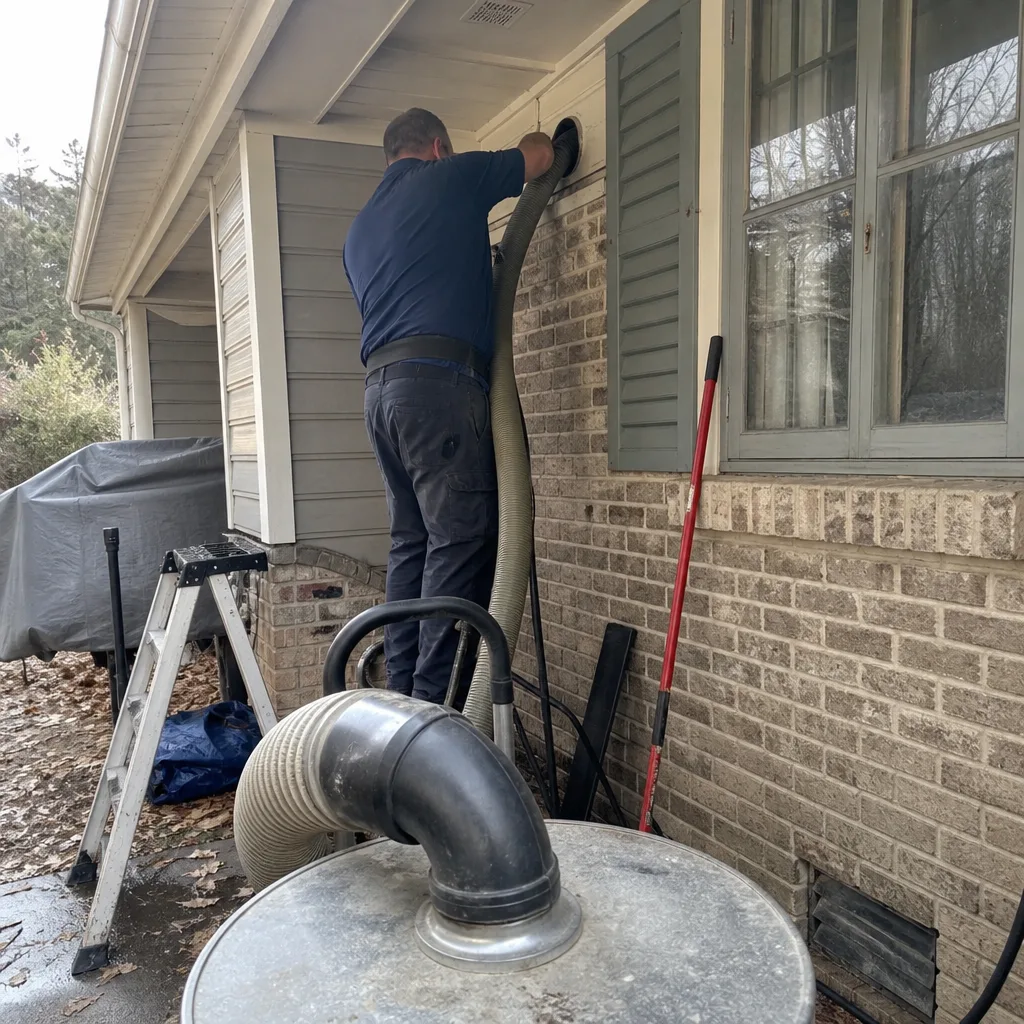 Before
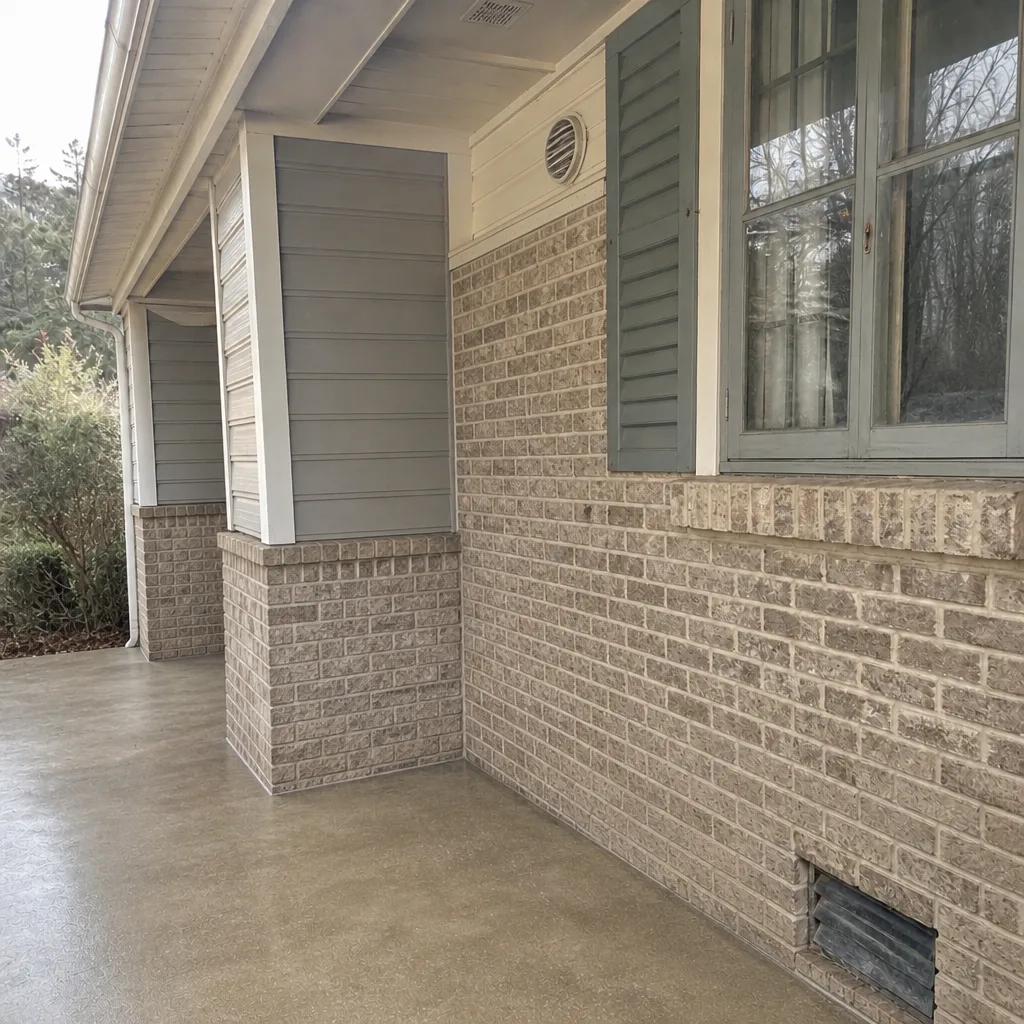 After
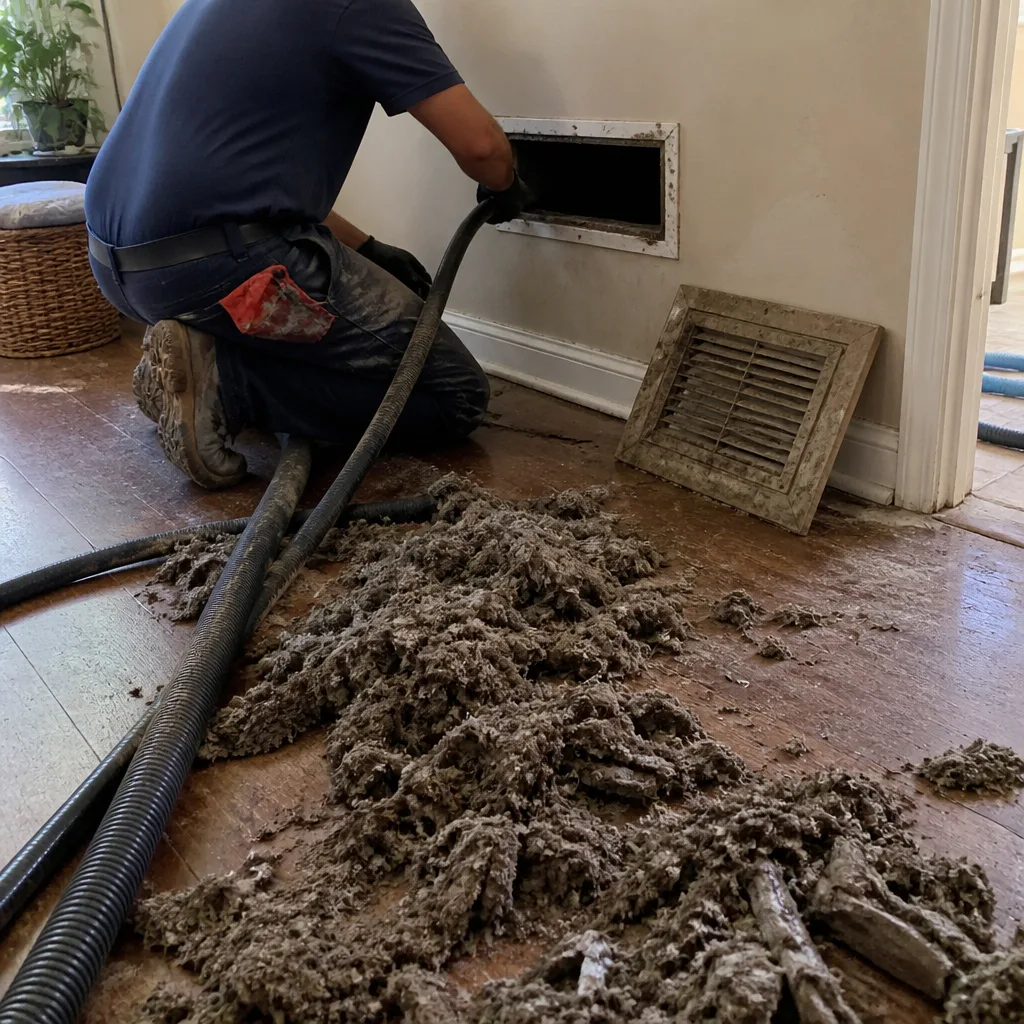 Before
 After
 Before
 After
When to Call a Professional
Call a professional when you have two or more of the warning signs on this page showing up at the same time, or when any one sign is significant on its own: a persistent musty smell through the house, a musty smell paired with visible mold on a register boot, a bill jump that doesn’t match the weather, one room running 4 to 6 degrees off the thermostat with weak airflow at the register, or evidence of pests in the attic or crawlspace that houses the ducts. Don’t run the system if you suspect microbial growth inside it, and don’t try to open the air handler cabinet or clean the ducts without the right equipment – negative-air extraction and containment are what keep the cleaning from becoming a distribution event for the whole house.
Air Duct Cleaning Adams Farm offers free estimates in Adams Farm – call (877) 770-1927. Our technicians have up to 11 years of experience, and we use Rotobrush and Nikro extraction systems with camera documentation so you can see exactly what was found and what was cleaned.
Frequently Asked Questions
Your ducts likely need cleaning if you’re seeing two or more warning signs together: uneven room temperatures, a musty or moldy smell tied to HVAC operation, a bill spike with no usage change, allergy symptoms that flare when the system runs, or visible debris that keeps reappearing at the registers. The most reliable check is a camera inspection with photos, which Air Duct Cleaning Adams Farm performs with Rotobrush and Nikro equipment. Call (877) 770-1927 for a free estimate and we’ll document what the camera finds.
The final price is set per job by a written estimate after the system is inspected, because a small single-story home and a two-story with long trunk runs are different jobs. That’s also the honest answer to the bait-and-switch question you’ll hear about in this industry: quotes that sound low up front often become something else once the technician is on site. Ask any contractor for the whole-system estimate in writing, agreed before work starts, and before-and-after photos of your own ducts. All of that is standard with us – call (877) 770-1927 for an exact quote. Estimates are free.
Yes – leaking ducts are a plausible cause of that size of jump in HVAC energy consumption, and it’s commonly misattributed to aging equipment. The leak is usually the actual mechanism, and the fix is duct repair and sealing. Before you replace a system that’s running badly, get the ducts inspected. Call (877) 770-1927 for a free estimate.
A musty smell in the first 30 to 60 seconds after startup usually points to a problem in the air handler or evaporator coil – the parts that stay damp during cooling season and dry out when the system is off. A smell that stays all day is more likely coming from inside the ducts themselves or from moisture in the chase around them. Either way, get a camera inspection before assuming the fix is simple cleaning. Call (877) 770-1927 for a free estimate.
Sanitizing is a separate step from cleaning, and it’s what addresses odor and microbial load beyond what cleaning removes. It works best after the system has been cleaned and sealed so the source is gone and the treatment holds. We use Guardsman sanitizing treatment as an add-on when odor or microbial growth is confirmed during inspection. Call (877) 770-1927 to have the system checked and get a written estimate.
Yes, if you have other warning signs, because what you see at the register is the very end of the run and only a fraction of what’s inside the system. A camera inspection shows the trunk, the long runs, and the air handler cabinet – the parts where contamination actually settles. Call (877) 770-1927 for a free estimate with camera documentation before and after.
No – a shop vac and a consumer brush won’t reach the trunk or pull contaminants out of the system, and they can push more debris into the air than they remove. Professional Rotobrush and Nikro systems use negative-air extraction with containment so the debris leaves the house instead of spreading through it. Beyond that, the air handler cabinet carries live electrical components and the coil stays wet; opening it without training is a genuine safety risk. Call (877) 770-1927 and let a trained technician handle it.
A proper inspection includes a register-by-register airflow check, camera insertion into the trunk, the longest runs, the worst-performing runs, and the air handler cabinet, plus photos of everything the camera finds before any cleaning starts. The post-clean camera check is the second half of the job – that’s how you know the work was actually done. That’s how we do every job. Call (877) 770-1927 for a free estimate.
Possibly – dryer vent cleaning is a separate service from air duct cleaning, but it belongs on the same radar if your ducts show signs of long-term neglect. A clogged dryer vent is a fire hazard, not just a performance issue, and it’s one of the more consequential things we check. Both services can be scheduled together. Call (877) 770-1927 for a free estimate and we’ll look at dryer vent cleaning alongside the ducts.
The Bottom Line
Duct problems usually show up as indirect symptoms: a room that runs 4 to 6 degrees hot, a bill that climbs with no change in usage, a musty smell on HVAC startup, allergy symptoms that track the system’s run cycle, or dust patterns that are heavier in some rooms than others. Any one on its own might mean something else. Two or three together is the pattern that merits an inspection. The most reliable evidence is a camera check with before-and-after photos of your own system, using Rotobrush and Nikro equipment. Fixing the leak and sealing the system is just as important as cleaning it. If the signs line up, don’t wait for a failure – get it looked at while the fix is still simple.
Air Duct Cleaning Adams Farm offers free estimates in Adams Farm. Call (877) 770-1927. We answer 24/7. Fast dispatch, 7am-7pm, Sunday through Friday. One flat price per system, agreed before work starts, with before-and-after photos of your own ducts.
Written by the team at Air Duct Cleaning Adams Farm.