
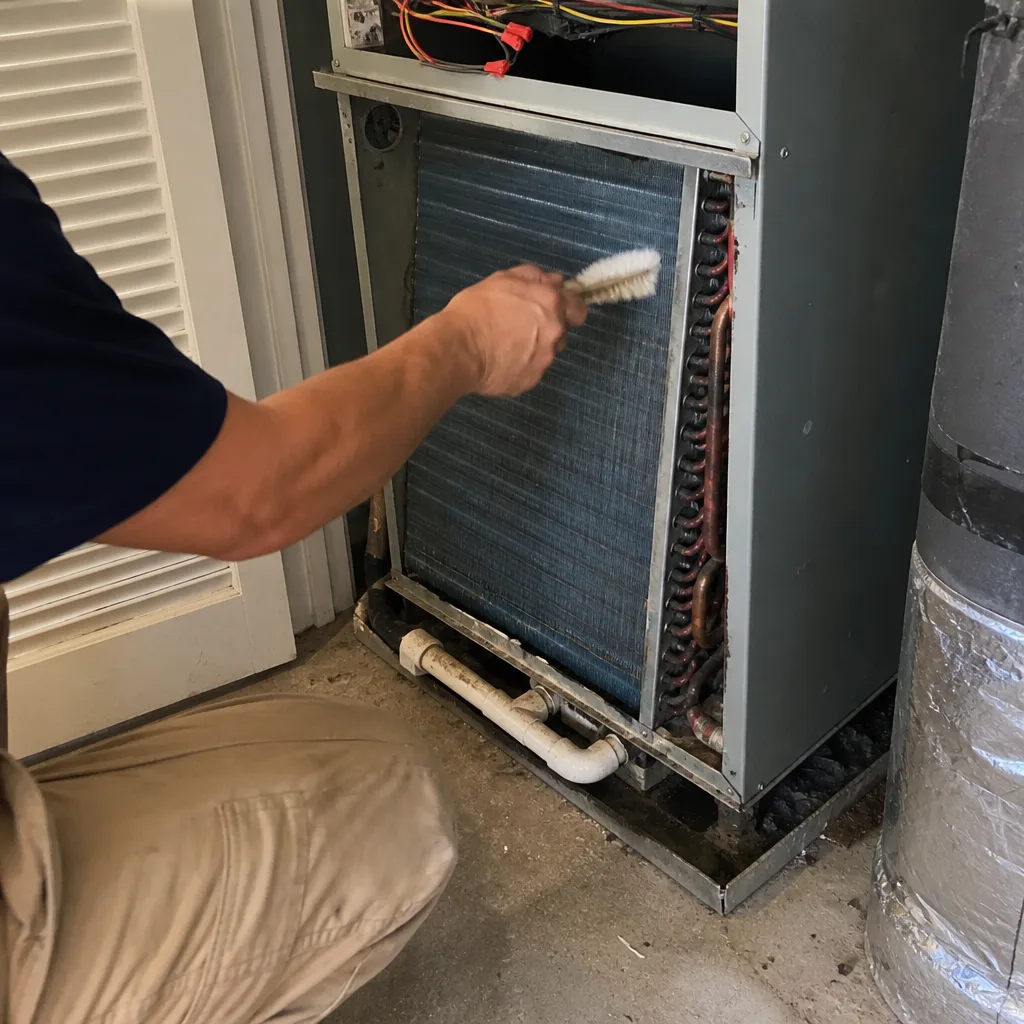
Last updated November 23, 2026
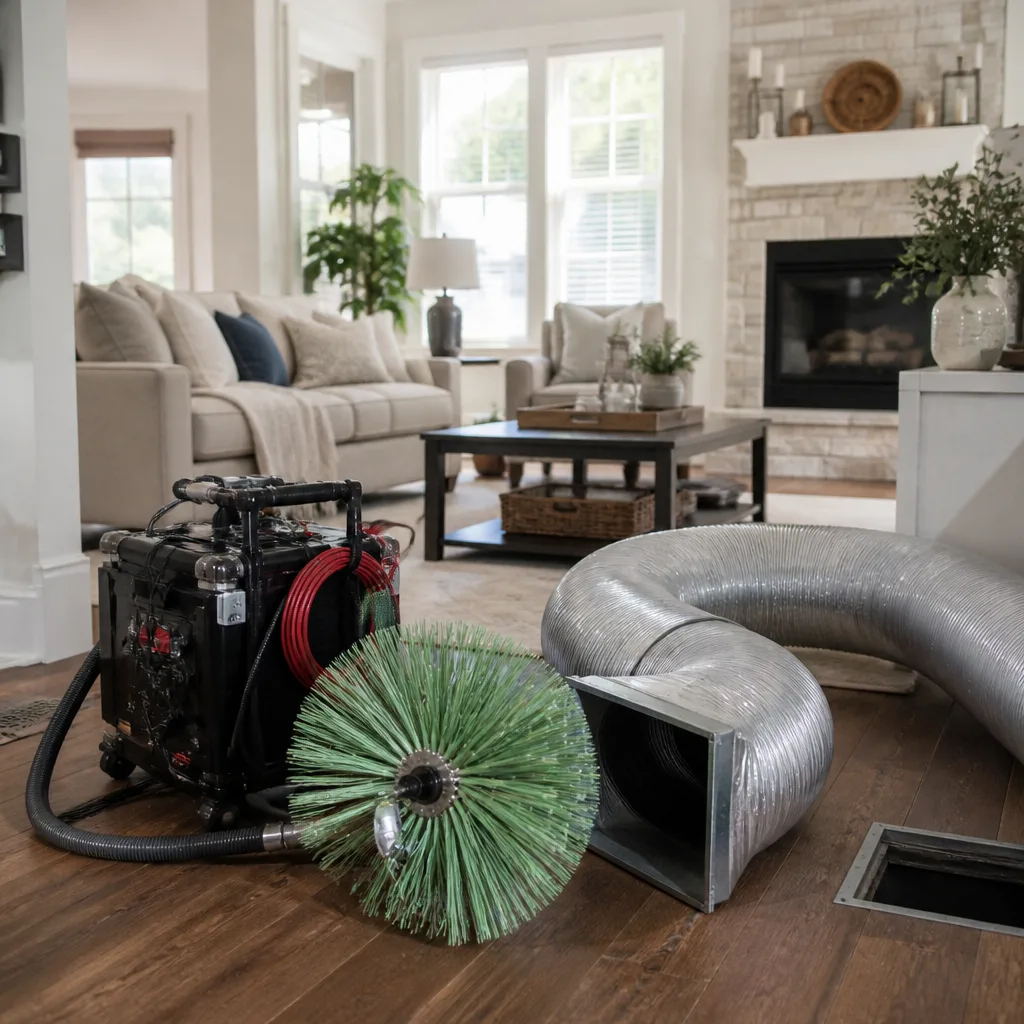 Whole-home duct cleaning
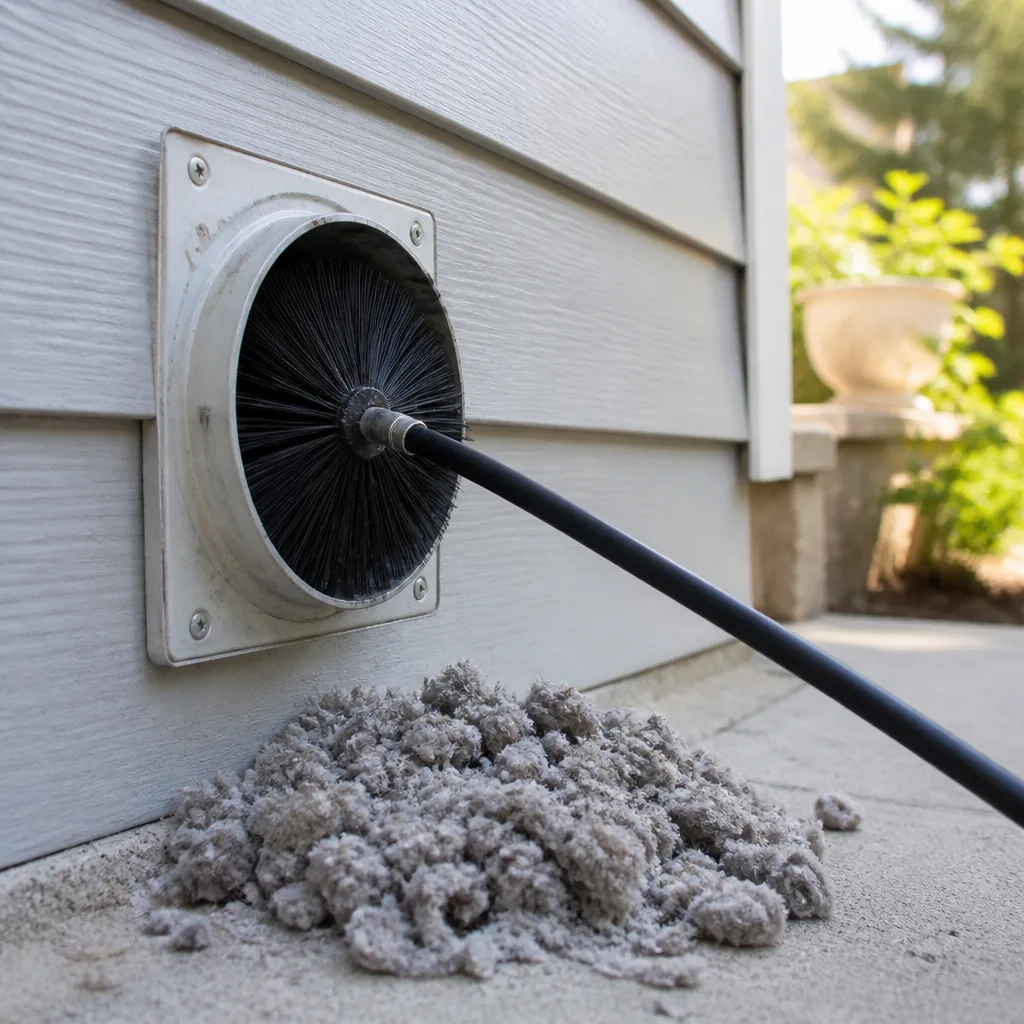 Dryer vent cleaning
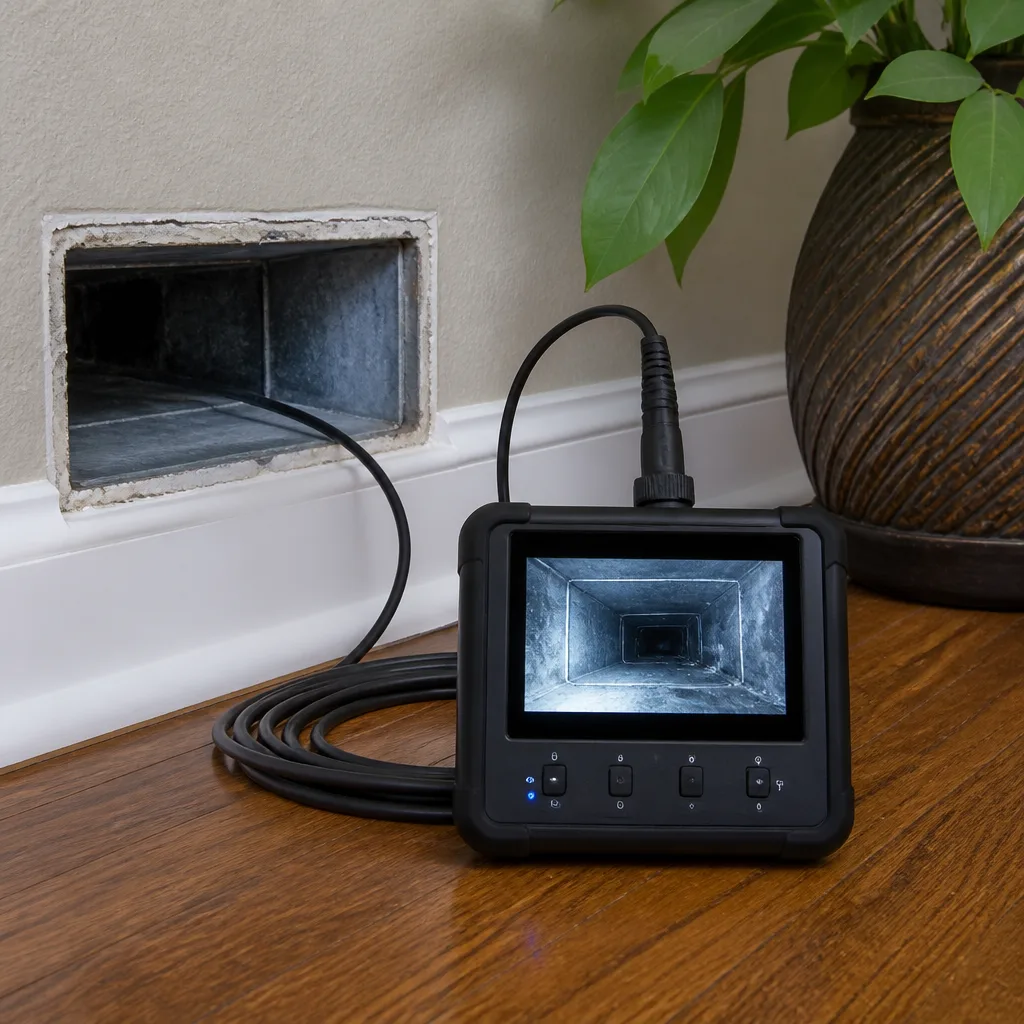 Camera inspection
 Sanitizing & deodorizing
Whole-system duct and dryer vent check with before-and-after photos - you see exactly what came out of your vents
That "$99 whole-house special" is a bait ad - the real number appears once they are in your hallway, or the "clean" is a shop-vac at the register. We photograph the inside of your ducts before and after instead.
The Complete Guide to Air Duct Cleaning in Adams Farm
Most Adams Farm homeowners don’t need to know everything about air duct cleaning. They need to know what happens inside their own duct system, and why a humid Piedmont Triad climate makes their situation different from what a national article describes. Here’s the part that surprises people: the EPA does not recommend a set cleaning schedule for air ducts. There is no scientifically supported three-to-five-year rule, no matter how confidently a company quotes one. That rule is marketing, not science. This guide covers the inspection that decides whether you need cleaning at all, how rotary brush and negative-air systems differ from a shop vac, why sealing matters as much as cleaning, and how to judge any claim you hear.
Quick Answer
Air duct cleaning in Adams Farm is a scheduled, inspected job, not a quick vacuum pass. A proper service starts with a pre-cleaning inspection of duct material, joint integrity, and airflow, then uses rotary brush and negative-air extraction equipment like Rotobrush or Nikro to remove debris from the whole system. Whether you need cleaning alone or cleaning plus sealing or sanitizing depends on what the inspection finds, and your Adams Farm home’s humidity and pollen load are the two biggest reasons the answer often differs from what a generic national guide says.
Styles & brands we work with
- Whole-home duct cleaning
- Dryer vent cleaning
- Camera inspection
- Sanitizing & deodorizing
Table of Contents
- Why Adams Farm Ductwork Ages Differently
- What a Real Pre-Cleaning Inspection Looks For
- Rotary Brush vs. Contact Vacuum: The Mechanical Difference
- Why Cleaning Without Sealing Undoes the Benefit
- The Full Cleaning Process, Step by Step
- Cleaning Alone vs. Sanitizing, Sealing, or Repair
- How to Judge Any Company’s Claims
- Common Mistakes to Avoid
- When to Call a Professional
Why Adams Farm Ductwork Ages Differently
Adams Farm sits in the humid subtropical band of the Piedmont Triad. Summers run long and muggy, and the air holds moisture in a way that drier regions never deal with. That matters inside your ducts because moisture is the condition microbes need to colonize a surface. A dust film that stays dry in a desert climate can support microbial growth in an Adams Farm attic or crawlspace once the relative humidity climbs and stays there.
The cooling season makes it worse. When an air-conditioning coil and the ductwork downstream of it run cold in a humid house, condensation forms on interior surfaces. Ducts routed through unconditioned Attic space are especially prone to this, and so are older flexible runs with sagging sections where moisture collects. Add the region’s heavy spring pollen load, and the return side of a system becomes a filter for everything the season throws at it.
What that means in practice:
- Microbial growth risk is seasonal and real. Warm, damp months are when surface growth starts, not deep winter.
- Pollen coats the return ducts. It sticks to the dust film and stays there until it’s mechanically removed.
- Condensation accelerates deterioration. Wet debris corrodes metal joints and weakens foil-backed flex duct over time.
- Older housing stock varies widely. Some Adams Farm homes have original sheet-metal trunk-and-branch systems, others have been reworked with flexible duct. Each fails differently.
The practical takeaway is that an Adams Farm home doesn’t necessarily need cleaning more often than one in a dry climate, but what collects inside the ducts behaves differently. Debris that stays wet is heavier, sticks harder, and won’t come out with light suction. Our technicians have up to 11 years of experience in this climate, and the pattern is consistent: humid-climate ductwork needs aggressive mechanical agitation, not just air movement.
What a Real Pre-Cleaning Inspection Looks For
A legitimate air duct cleaning job begins with someone looking inside your system before they quote you on cleaning it. If a technician arrives, connects a vacuum, and never inspects an access point, that’s a service selling a procedure, not solving a problem. Here’s what a proper inspection checks, in the order it usually happens:
- Duct material condition. Sheet metal, flex duct, and duct board all fail differently. Flex duct can tear or collapse. Duct board can delaminate when wet. Metal seams can separate. The material determines whether cleaning will help or whether a section needs repair first.
- Joint integrity. Every joint between duct sections is a potential leak. Gaps pull in attic air, crawlspace air, and contaminants along with it.
- Existing mold or microbial growth. Visible growth near the coil, on insulation facing, or in a humid return run changes the recommendation. Cleaning removes it; sanitizing addresses what’s left afterward.
- Airflow restriction. Crushed flex runs, disconnected sections, and blocked branch lines reduce how much air reaches a room. Cleaning a system with a hidden restriction doesn’t restore comfort.
- Contamination source. Sometimes the ducts are fine, and the issue is a dirty coil or a filter that hasn’t been changed. Knowing where contamination originates prevents cleaning the wrong part of the system.
In our experience, the inspection findings are what separate one Adams Farm job from the next. Two homes on the same block can need entirely different scopes because one has tight sheet-metal ducts and the other has a sagging flex trunk that’s been pulling unfiltered attic air for years. That’s why no honest company should quote a blind flat price for duct cleaning without seeing the system first. The written estimate should set the final price per job, based on what the inspection actually turns up.
Rotary Brush vs. Contact Vacuum: The Mechanical Difference
The equipment used to clean a duct determines how much debris actually leaves. A contact-vacuum-only approach means a hose is placed at a register, suction is turned on, and the hose pulls from the openings. That removes loose material near the access point and little else. The debris that matters – the film bonded to the duct walls by moisture, static, and time – stays put.
Rotary brush systems like Rotobrush work differently. A powered brush head is fed through the duct and rotated against the interior surface, agitating the entire wall while a negative-air collection unit traps what breaks loose. The brush does the work; the vacuum captures it. Combine that with a high-capacity extractor like a Nikro system, and the air being pulled through the ductwork creates negative pressure that keeps loosened debris from drifting into the living space.
Why agitation is the whole ballgame
Debris clings for two reasons. First, it’s physically bonded – wet dust, pollen, and microbial film stick to surfaces. Second, static electricity holds fine particles against duct walls. Suction alone fights that bond; mechanical agitation breaks it. A brush that reaches the entire interior circumference, including the top and sides the airflow never scours, loosens what suction can then remove.
This is the same category of equipment used in commercial and industrial duct cleaning, where systems are larger and the stakes for air quality are higher. It’s not a shop vac with a longer hose. When you’re evaluating a quote, ask directly: does the process include rotary brush agitation, and does it use negative-air extraction to contain the debris? A company that can name its equipment and explain the mechanics is a company that understands what it’s doing. A company that can’t is guessing.
If you want to see what the whole process looks like from inspection to final verification, our air duct cleaning service page breaks it down service by service.
Why Cleaning Without Sealing Undoes the Benefit
Cleaning a duct system that leaks is half a job. Leaky joints are how contamination gets back in and how conditioned air escapes. When return ducts pull air through gaps into an attic or crawlspace, they pull in everything that air contains – insulation fibers, dust, pest debris, moisture. Cleaning the ducts and then running them back up pulls the same contaminants right back into the system.
The energy side matters too. A duct system leaking into unconditioned space isn’t delivering paid-for conditioned air to the rooms you’re trying to keep comfortable. Sealing closes that loop. When we can find and fix those leaks as part of the same service visit, we address the cause of contamination rather than the symptom.
What sealing actually involves
- Locating leaks. Joints, connections at trunk and branch fittings, plenum transitions, and register boots all need to be checked.
- Mastic and foil-tape repair. Legitimate duct sealing uses mastic and approved foil-backed tape. Cloth-backed “duct tape” is a temporary fix that fails in humid climates.
- Flex duct repair or replacement. Torn or crushed flex runs get repaired or replaced where sealing alone can’t fix the problem.
- Verification. After sealing, the system should be checked for airflow and joint integrity before the job is called done.
The logic is straightforward: clean, then seal, then verify. A cleaning-only job on a leaky system may make the ducts look better for a short period while doing little for the air you breathe. When the HVAC cleaning side of a system is also addressed – the coil, blower, and cabinet surfaces – the whole air pathway, not just the ducts, gets brought back to clean. That’s the piece most cleaning-only companies leave out.
The Full Cleaning Process, Step by Step
Here’s what a complete professional cleaning involves from start to finish. This is the process sequence that gets results, whether the system is sheet metal or flex, whether the home is in Adams Farm or elsewhere in the Piedmont Triad.
- Pre-cleaning inspection and written scope. Access points are opened, ducts are inspected, and the scope is set. You get a written estimate before any work starts, and that estimate sets the final price per job. There’s no per-vent pricing and no low coupon that turns into a bigger invoice once the technician is on site.
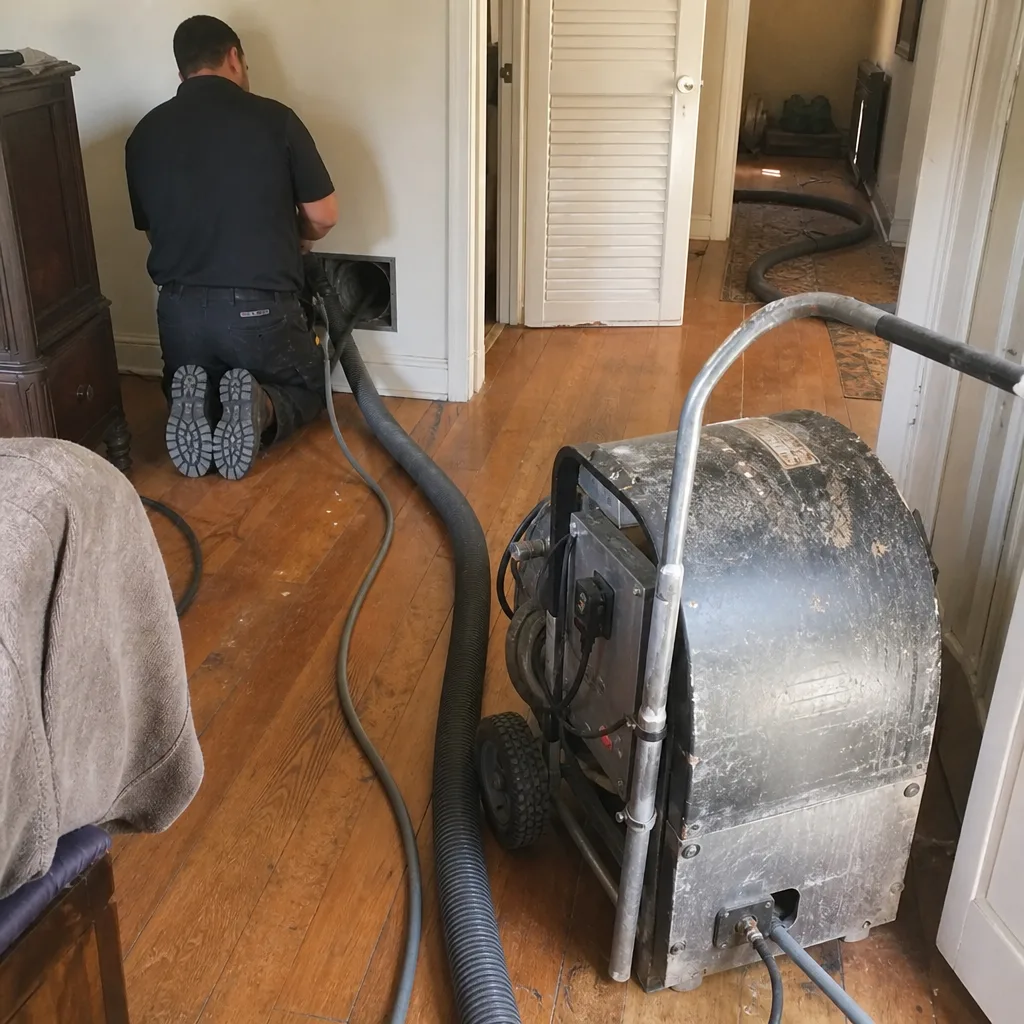
- Setup and containment. Negative-air equipment and containment are put in place so loosened debris doesn’t end up in your living space during the work.
- Rotary brush cleaning of the trunk and branch lines. A rotary brush system is fed through the ductwork, agitating the interior walls, while the extraction unit collects the debris.
- Register and grille cleaning. Supply and return grilles are removed, cleaned, and reinstalled. Diffusers and boots get the same treatment as the ducts they feed.
- HVAC unit cleaning. The air handler cabinet, blower wheel, and coil surfaces are cleaned so the unit isn’t reintroducing contamination downstream.
- Duct repair and sealing where needed. Leaky joints are sealed, damaged sections repaired, and the system checked for integrity.
- Sanitizing (optional, where indicated). A Guardsman sanitizing treatment is applied to provide antimicrobial protection and deodorizing where the inspection found microbial growth or lingering odor.
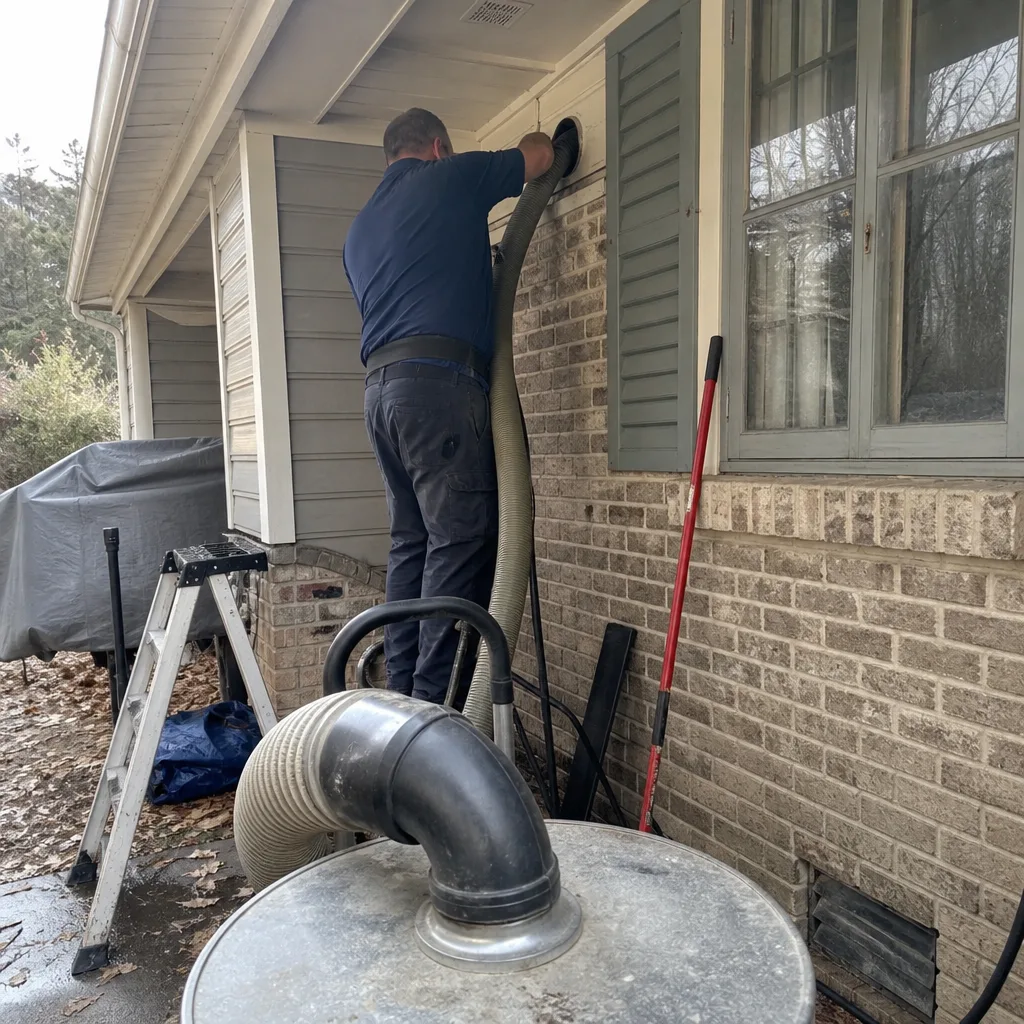
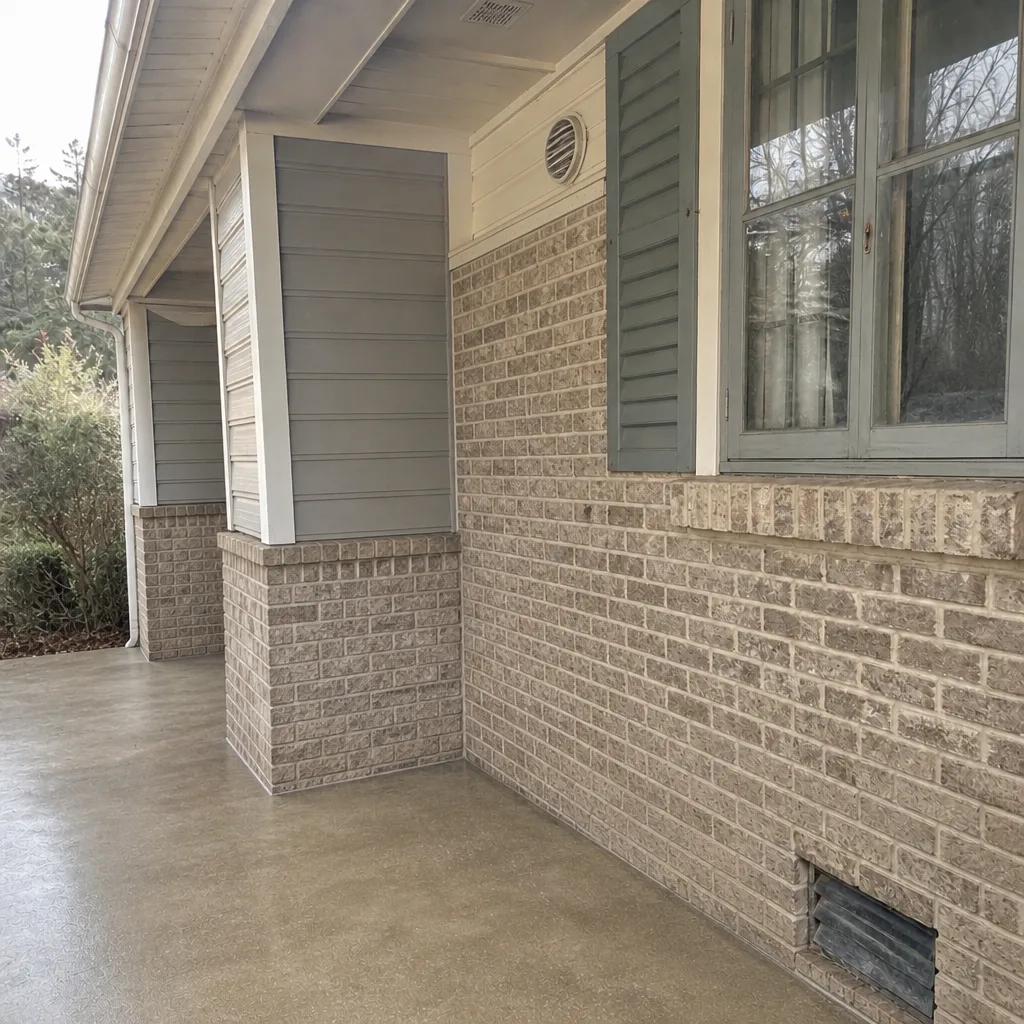
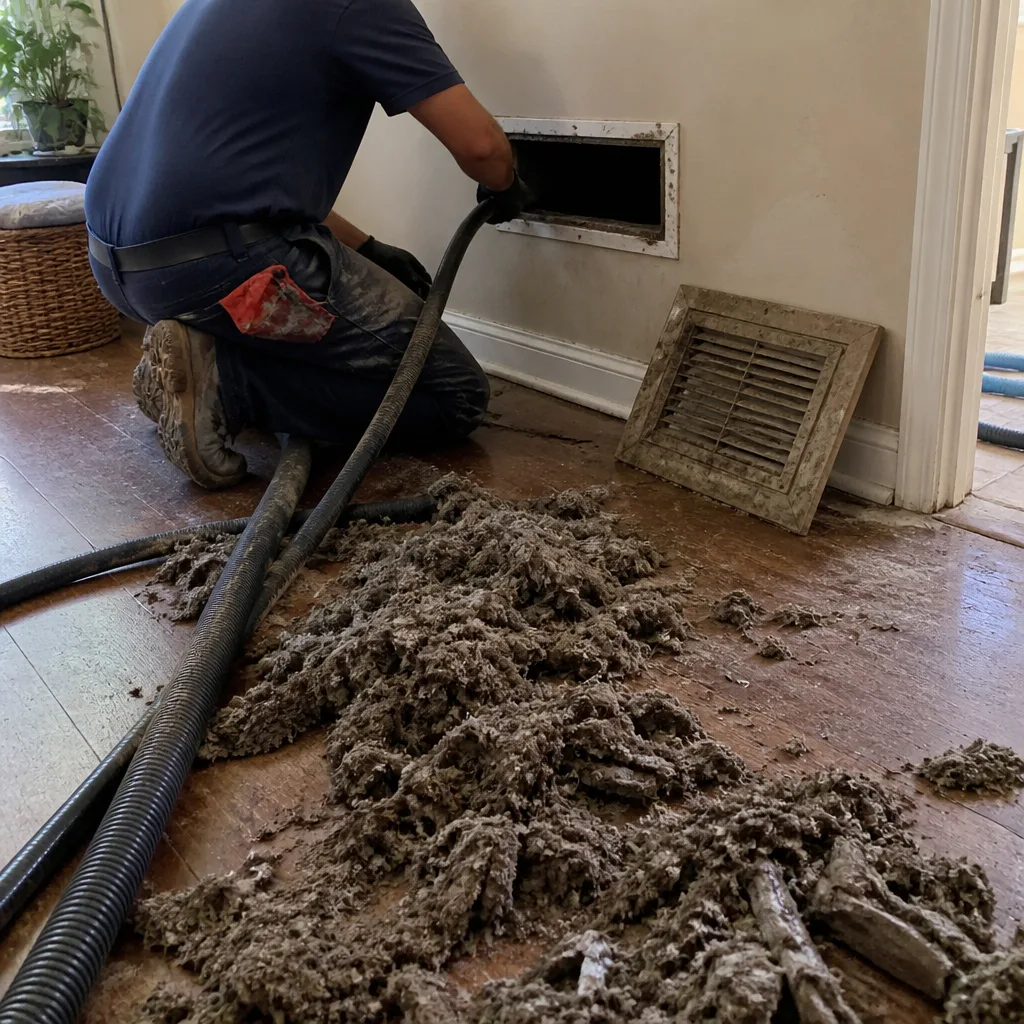
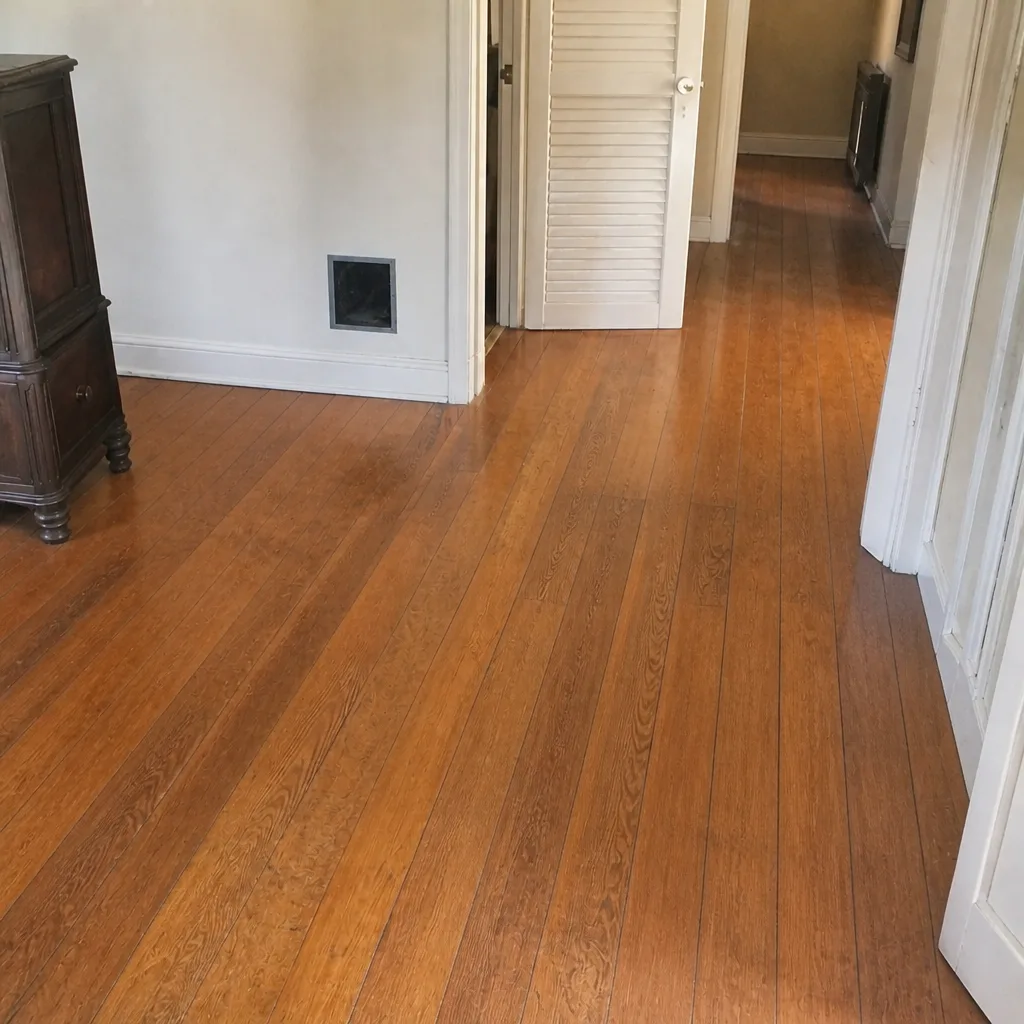
- Verification and documentation. The system is checked for airflow, and before-and-after photos of the ducts themselves are taken so you can see what was removed. Documentation matters especially if you’re preparing a home for sale or moving into a newly purchased home.
Alongside all of that, the dryer vent cleaning service addresses a separate safety concern in the same visit if you need it. Lint buildup in a dryer exhaust is one of the leading causes of residential fires, and it’s a component of home safety that most homeowners never think about until it’s flagged. Having cleaning for both systems handled by one provider is the convenience of not coordinating two separate contractors.
Cleaning Alone vs. Sanitizing, Sealing, or Repair
Not every Adams Farm home needs every service. The inspection findings determine the right scope. Here’s how to think about when cleaning alone is enough and when more is warranted.
When cleaning alone is likely sufficient
- The ducts are structurally sound with tight joints and no visible gaps
- There’s no visible microbial growth on duct surfaces
- Airflow to all rooms is adequate and the system is balanced
- The primary issue is accumulated dust, pollen, and pet dander from normal use
When sanitizing should be added
- Inspection finds microbial growth, mold staining, or persistent odor
- There’s been a moisture event – a leak, flooding, or prolonged high humidity in a duct run
- Pests have been present in the system and contaminated surfaces
- Someone in the household is allergy-sensitive or immune-compromised and air quality is a priority
When sealing or repair is the necessary next step
- Visible gaps at joints, disconnected sections, or torn flex duct
- Duct runs through unconditioned attic or crawlspace with leaks you can feel
- High energy bills that suggest the system is losing conditioned air before it reaches the rooms
- Repeated contamination coming back after cleaning, which almost always points to a leak
When air quality products help long-term
For homes where the goal is ongoing air quality improvement rather than a one-time fix, we pair cleaning with products from Honeywell, Aprilaire, or Abatement Technologies. These are the filtration, humidity control, and air cleaning products that address what a cleaning alone can’t – ongoing filtration and moisture management. Nationwide, most duct cleaners stop at the cleaning step. Offering cleaning plus sealing plus air quality products under one provider is the difference between a one-time job and a system that stays clean and sealed.
How to Judge Any Company’s Claims
Homeowners in Adams Farm research purchases carefully, and that’s the right instinct. The duct cleaning industry has a reputation problem – low teaser coupons that become large invoices once a technician is on site, vague process descriptions, and jobs that can’t be verified. Here’s how to tell a real service from a sales operation.
Questions that separate serious companies from the rest
- “What equipment do you use?” A serious answer names rotary brush and negative-air extraction systems like Rotobrush or Nikro. A vague answer about “professional equipment” is a warning sign.
- “Can I see a written scope before you start?” A legitimate service inspects first, then gives you a written estimate that sets the final price per job. There’s no per-vent pricing and no surprise add-ons once work begins.
- “How will I know the work was done?” Before-and-after photos of your own ducts are the standard. If a company can’t document its work, it can’t prove it happened.
- “Do you inspect before cleaning?” Inspection catches duct material problems, joint leaks, and existing microbial growth before they become bigger problems. A company that skips inspection is skipping the part that requires judgment.
- “What guarantees do you offer?” Ask what happens if you’re not satisfied. A clear answer here tells you how the company handles its work.
The per-vent pricing trap
Per-vent pricing looks simple until you realize it encourages cleaning only the easy access points and skipping what’s harder to reach. Whole-service pricing based on the full scope of work is honest, and it’s what a written estimate should reflect. If a quote doesn’t reflect a real inspection, it isn’t a real quote. Call (877) 770-1927 for an exact quote – the estimate is free, and the written estimate sets the final price.
Common Mistakes to Avoid
- Believing a fixed three-to-five-year rule. The EPA doesn’t recommend a set cleaning schedule. Your home’s humidity, pollen load, occupant allergies, and inspection findings should drive the decision, not a number a salesperson picked.
- Choosing a quote with no inspection. A blind quote can’t account for the state of your specific duct material or leaks in your specific home. In Adams Farm’s humid climate, the difference between one home’s ducts and the next is real; an inspection almost always changes the scope and the price should reflect it.
- Accepting a contact-vacuum-only cleaning as the full job. If the company can’t name the equipment it uses to agitate duct walls, you’re likely getting surface suction, not real debris removal.
- Skipping sealing after cleaning. Cleaning leaky ducts without sealing the leaks means the system pulls contamination back in. If a company never mentions duct repair or sealing, that’s a gap in what it’s offering.
- Ignoring the HVAC unit itself. Cleaning the ducts while leaving an uncleaned coil and blower wheel just reintroduces contamination downstream. The whole air pathway needs to be addressed.
- Forgetting the dryer vent. Lint in a dryer exhaust is one of the leading causes of residential fires. If you’re paying for a duct service, ask about dryer vent cleaning at the same time.
- Not asking about before-and-after photos. Documentation is how you verify the work. A company confident in its process will show you the pictures.
When to Call a Professional
Some signs say it’s time for professional evaluation, not a DIY inspection. Call a professional if you see visible dust or debris blowing out of registers when the system runs, if a visible inspection of the return duct or air handler reveals microbial growth or odor, if someone in the household has ongoing allergy or respiratory symptoms that don’t respond to filter changes, if you’ve had a moisture event affecting the HVAC system, if you’re moving into a newly purchased Adams Farm home, or if you’re preparing a home for sale and need documented proof that the system is clean. Also call if you’ve noticed higher energy bills that suggest duct leakage. Air Duct Cleaning Adams Farm offers free estimates in Adams Farm – call (877) 770-1927. We answer 24/7. Fast dispatch from 7am to 7pm, Sunday through Friday.
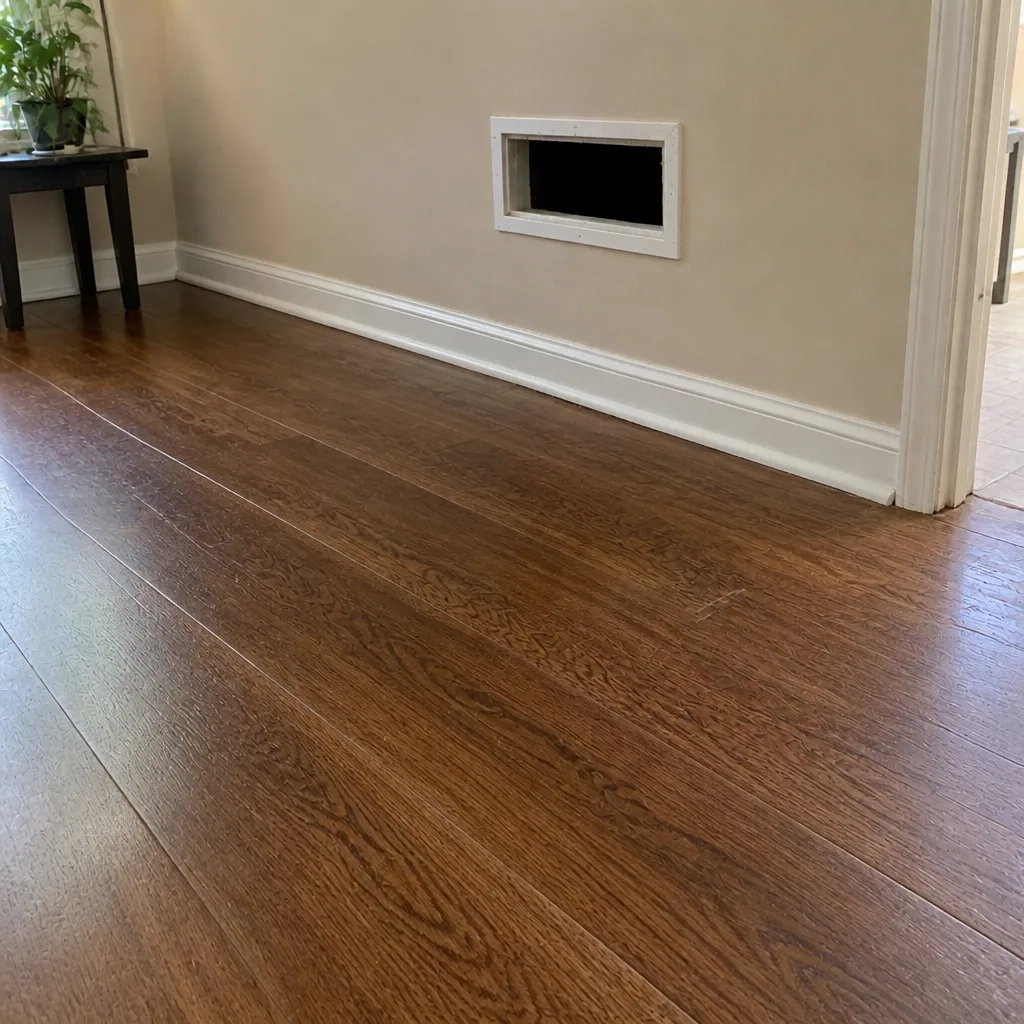
See the difference
 Before
 After
 Before
 After
 Before
 After
Frequently Asked Questions
Air duct cleaning in Adams Farm is priced per job by a written estimate based on the system’s scope – the size of the home, the number of runs, condition, and whether repair or sealing is needed. We don’t quote per-vent prices or teaser coupons. The written estimate sets the final price. Call (877) 770-1927 for an exact quote – the estimate is free. We answer 24/7. Fast dispatch from 7am to 7pm, Sunday through Friday.
The EPA does not recommend a specific cleaning schedule for air ducts. The right answer depends on your home’s humidity, pollen exposure, whether pets live indoors, allergy or respiratory concerns, and what a pre-cleaning inspection finds. For most Adams Farm homes, most cleaning calls are driven by observed contamination rather than a calendar rule. An inspection is the honest way to decide. Call (877) 770-1927 to schedule one – the estimate is free.
Cheaper quotes often reflect a different scope – contact-vacuum-only cleaning, no inspection, no sealing, or a per-vent pricing structure that skips what’s hard to reach. Sometimes the cheap quote is the same equipment and process, but the price changes once a technician is on site. One flat price per system, in writing before work starts, is how to tell the difference. Call (877) 770-1927 for a real written estimate – the estimate is free.
Ask for before-and-after photos of your own ducts. Legitimate service documents what was removed so you can see it. A company confident in its process will provide that documentation. Call (877) 770-1927 to schedule an estimate.
Sealing should be added if the inspection finds leaky joints, disconnected sections, or duct runs through unconditioned space where conditioned air is escaping. Cleaning alone on a leaky system lets contamination return. Sealing plus cleaning addresses the cause. The inspection determines which applies to your home. Call (877) 770-1927 to schedule a free estimate.
Sanitizing is worth adding when the inspection finds microbial growth, persistent odor, or a moisture event – not always as a default step. We use Guardsman sanitizing treatment for antimicrobial protection and deodorizing. If cleaning alone is sufficient, we’ll say so. Call (877) 770-1927 to schedule an inspection and a free estimate.
The Bottom Line
Air duct cleaning in Adams Farm is a scheduled, inspected job, not something to schedule on a fixed calendar rule. What matters most is the pre-cleaning inspection: it tells you whether your home needs cleaning alone, cleaning plus sealing, sanitizing, or repair. Equipment matters too. Rotary brush and negative-air extraction systems like Rotobrush and Nikro remove what suction alone leaves behind. And if you’re in Adams Farm’s humid climate, sealing leaky joints so contamination can’t get back in is part of the job, not an upgrade. One flat price per system, agreed before work starts, is how you know a job is honest. Our technicians have up to 11 years of experience. Call (877) 770-1927. We answer 24/7. Fast dispatch from 7am to 7pm, Sunday through Friday.
Written by the team at Air Duct Cleaning Adams Farm.